
Combining Massive Transactional Data with Consumer Reviews to Examine the Psychology of Perfume Consumption
This project investigates how sensory perceptions shape perfume purchase behaviour by combining large-scale retail transaction data with consumer review data. It focuses on the psychology of fragrance consumption, examining how perceived longevity, sillage, gender association and price value relate to real-world sales patterns. The work formed part of my first-year PhD research and contributes to the development of a broader behavioural model of fragrance consumption.
Perfume consumption is influenced by a combination of sensory and symbolic cues, including scent profile, branding, packaging and perceived value. Despite the commercial importance of the fragrance sector, there is still limited large-scale evidence linking consumer perceptions to actual purchasing behaviour. This project addresses this gap by integrating consumer-generated perfume review data with transaction data from a major UK perfume retailer.
The study aims to explore how perceived sensory characteristics, particularly longevity, sillage and value for money influence sales outcomes. By combining digital footprints from online reviews with real-world retail data, the research examines whether the way consumers evaluate perfumes aligns with how they purchase them in practice.
More broadly, the project contributes to research in consumer psychology, sensory marketing and digital footprint analytics. It demonstrates how large-scale review data can provide meaningful behavioural insights when analysed alongside sales transaction records. Preliminary findings suggest that sensory perceptions are associated with measurable differences in sales performance.
The analysis integrates two datasets: transactional sales data from a major UK perfume retailer and consumer review data comprising over two million entries. From these sources, composite variables were developed, including Longevity Score, Sillage Score, Gender Score and Price Value Score. These metrics were constructed using weighted crowd-sourced evaluations from consumer reviews.
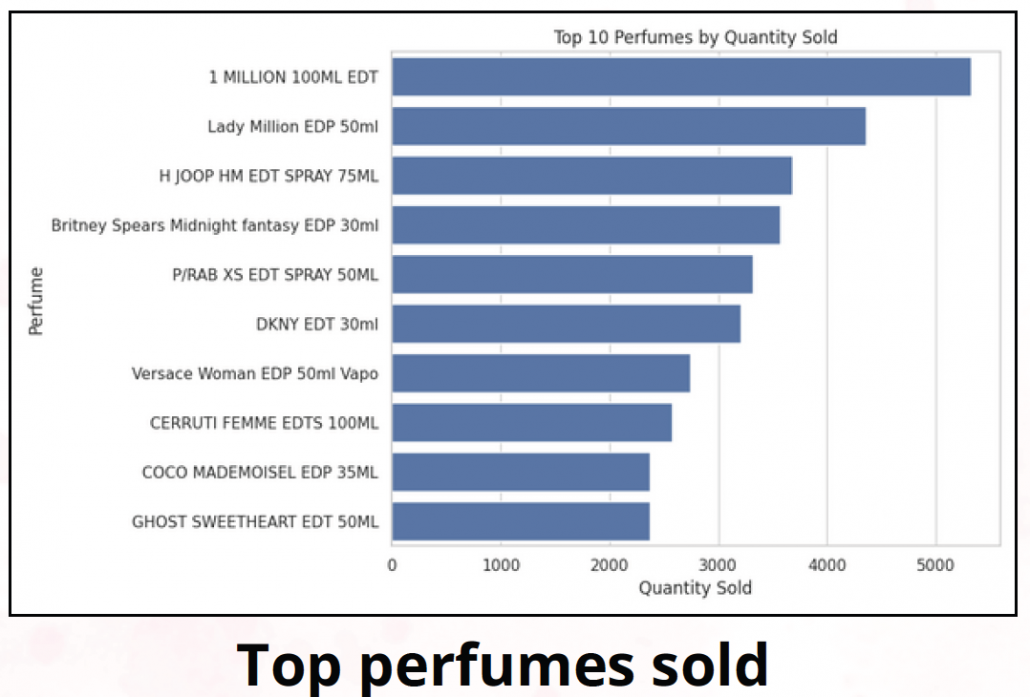
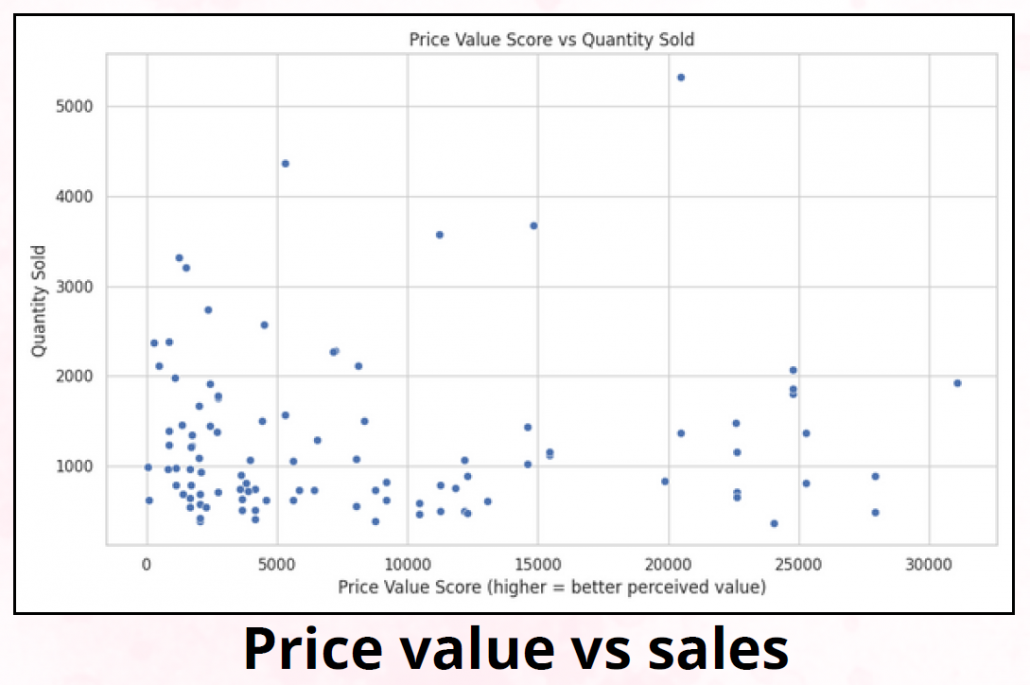
Exploratory data analysis was conducted in Python using Pandas, Seaborn and Matplotlib. The analysis generated visual outputs examining relationships between sensory perception measures and sales performance. These included distributions of top-selling perfumes, sales patterns across gender categories, and associations between sales and perceived longevity, sillage and price value.
Early findings indicate that sensory perception is linked to perfume sales performance. Fragrances perceived as longer-lasting and with more pronounced scent projection tend to achieve higher sales. Similarly, stronger perceived price value is associated with improved sales performance. Unisex fragrances dominated sales, although gender-related purchasing patterns remain visible.
The results also suggest that consumers may favour perfumes with moderate longevity and sillage, reflecting a balance between noticeable performance and everyday wearability. Overall, the findings highlight the importance of sensory perception in shaping real-world purchasing behaviour.
Sensory Appeal and Purchase Behaviour: Combining massive transactional data with consumer reviews to examine the psychology of perfume consumption.
The perfume industry faces significant ethical scrutiny ranging from environmental degradation and labour concerns to the carbon costs of global logistics. Despite these concerns, consumer purchase decisions are more often guided by… [more]

